

How Rolexes and handbags became the shadow bank for organised crime
Watches, handbags and jewellery help move billions in criminal cash outside the financial system every year in a system called “trade based money laundering”


What do a Patek Philippe watch, Chinese international students, an ancient honour-based law and cocaine from Ecuador have in common? They’re all part of “trade-based money laundering”, a system used by criminals taking advantage of the loosely regulated luxury industry to transfer and clean money.
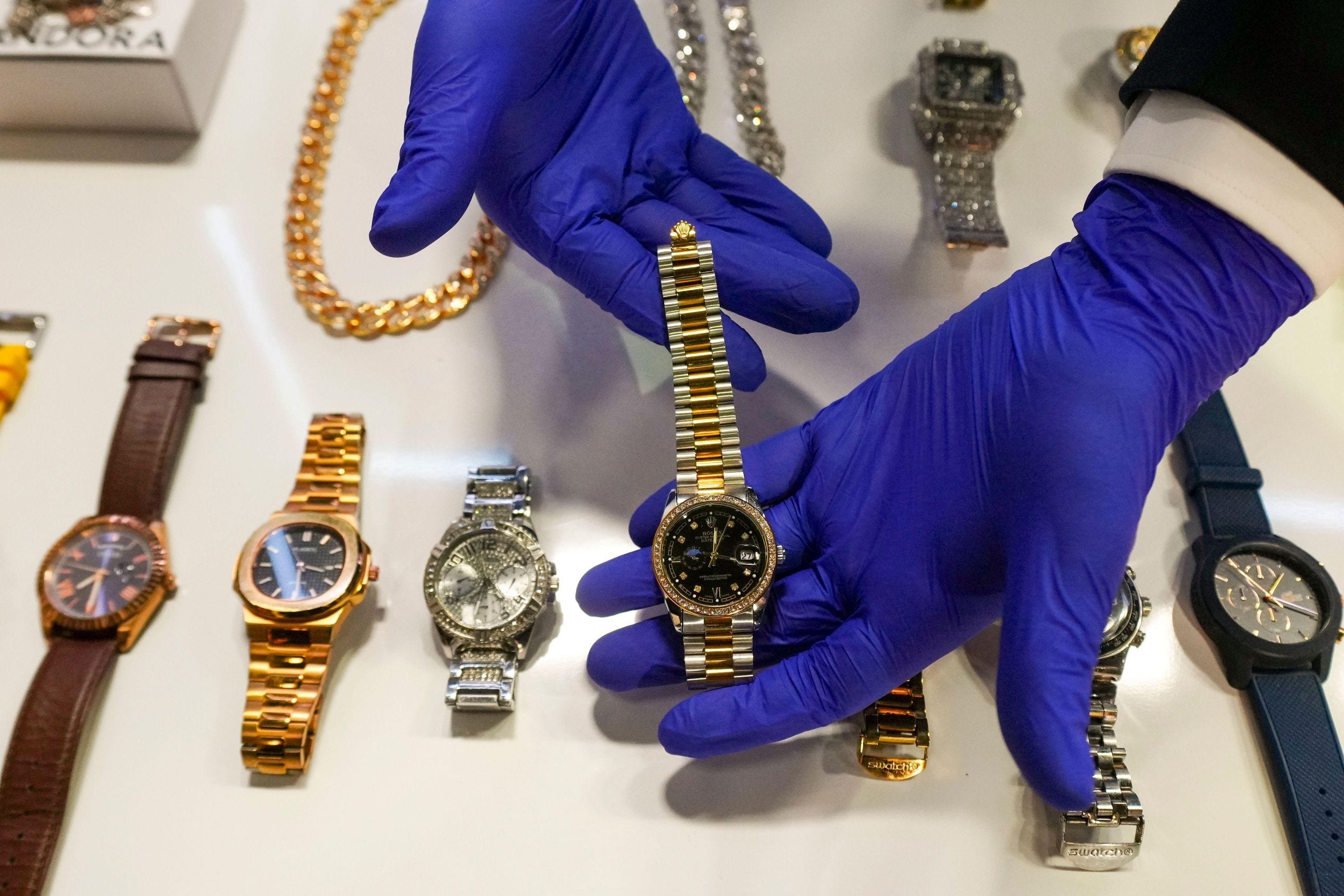
Whether they’re dealing in cocaine, untaxed cigarettes or counterfeit Adidas shoes, organised criminals all have the same problem. They must “clean” and transfer the money they have made from their criminal activities and keep the true purpose of these transactions secret from the authorities. Luxury goods, such as watches, handbags and jewellery, are an ideal vehicle to facilitate this cleaning, and are commonly traded between groups to keep their criminal enterprises running.
“They’re basically swapping drugs for Gucci”
Luxury goods have become the money launderer’s product of choice because they sit outside or peripherally to the financial system and its established system of compliance checks. They are also easily available at retail stores, are often small and portable, worth a lot of money and tend not to arouse much suspicion while in transit. “You can carry a watch on an airplane without anybody really thinking anything of it”, says Oliver Bullough, author of Everybody Loves Our Dollars, speaking to Dark Luxury.
The UK’s National Crime Agency estimates that more than £100 billion a year is laundered through or within the UK and the global flow is estimated at around $1.6 trillion. A large proportion of this laundering involves luxury goods. One police officer in Bullough’s book guesses that as much as 80 per cent of luxury watch purchases are linked to this illicit trade, an astonishing number which is larger than many estimates we’ve seen elsewhere.“I regularly talk to police officers who specialise in financial crime”, he says, who have told him that “there’s a high value watch dealer in Knightsbridge and essentially one hundred percent of their business is money laundering”.
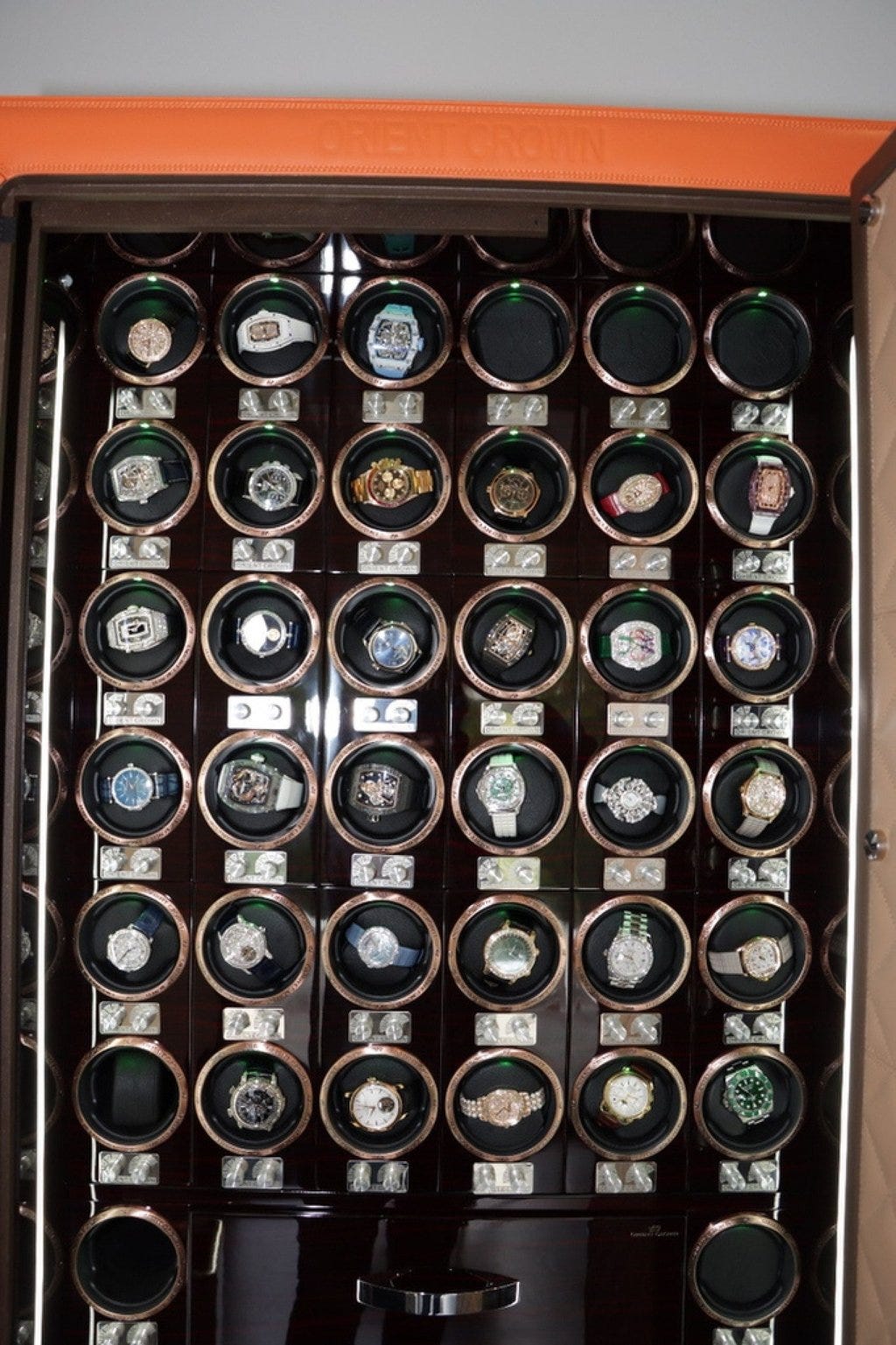
Even though this trade is a secret, there are many public examples which experts say are just the tip of the iceberg of the problem. Gold and jewellery worth £2 million was seized at Manchester airport in November 2025, and in March this year Kent police arrested a luxury watch trader with £400,000 worth of watches including Rolexes. But these two cases are just minnows compared to the billions of dollars of luxury goods including Patek Philippe and Richard Mille watches, along with gold bars, which were among hundreds of seized items from a single Singapore operation in 2023. No-one knows the full extent of the trade.
“Luxury goods producers are making extravagant profits from the trade too”, says Bullough. In his book, he mentions Bicester Village, reportedly a common site used by Chinese daigou or “surrogate shoppers”. In the daigou trade, criminals deliver cash to international students, who use it to buy luxury goods like handbags which are then sold in China for a profit, with the added bonus of defrauding taxpayers out of VAT refunds and obscuring the source of money. Last year Dark Luxury reported on how this worked at Louis Vuitton’s Barcelona flagship, and a $210 million shareholder settlement by beauty giant Estée Lauder over daigou gives a hint at the scale of this trade.
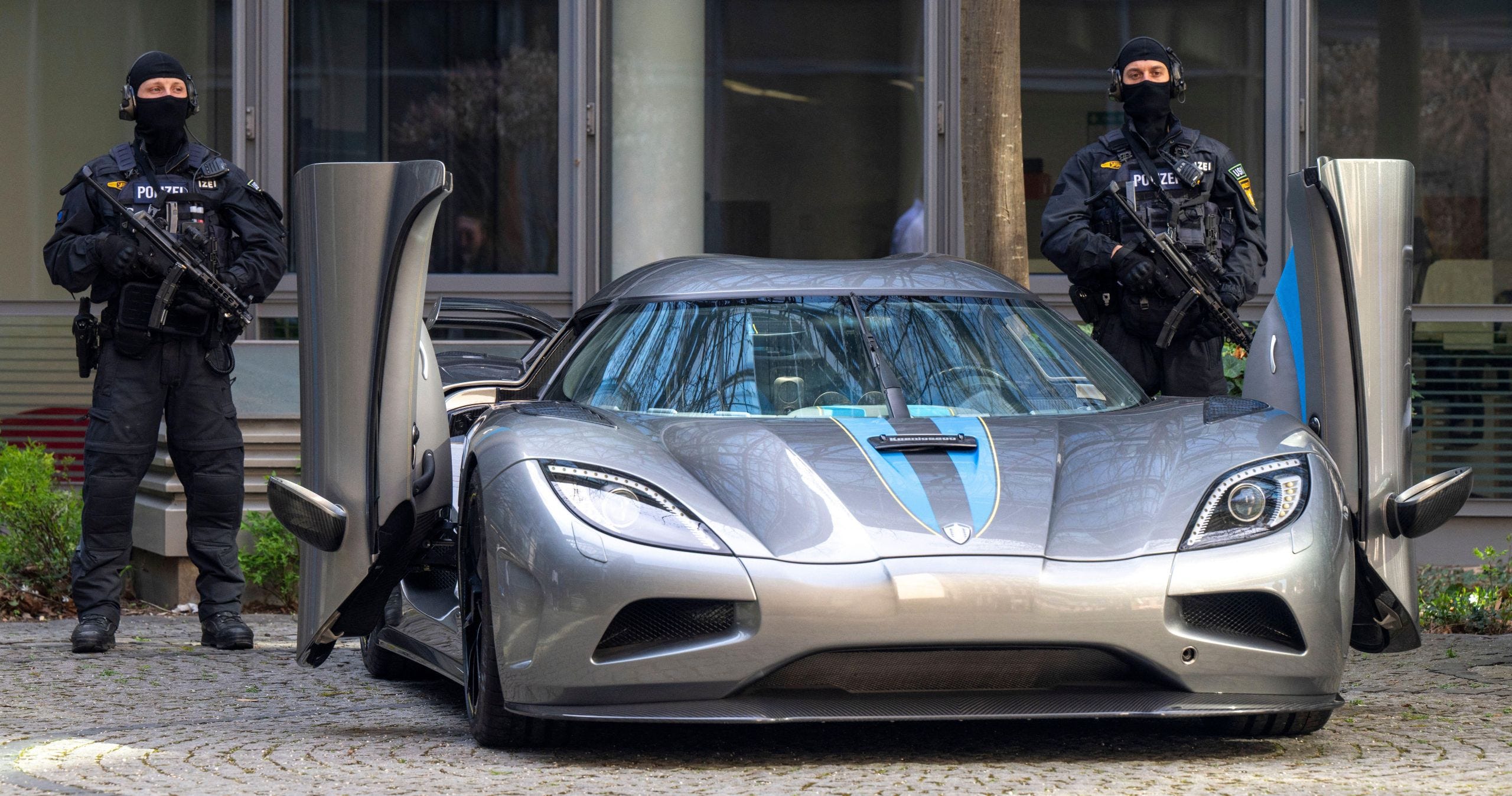
The daigou trade is mostly “off the books” and hard to track since it stretches across multiple jurisdictions, which makes it ideal for funding a mirror trade in drugs and illicit goods. The daigou network and the drug network never exchange money directly. Instead, a broker matches a cartel with dollars to sell against a Chinese buyer with renminbi to spend and the goods settle the trade physically. In countries like Ecuador, which uses the US dollar and whose second-largest criminal economy is money laundering, according to the Ecuadorian Organized Crime Observatory, “precursor chemicals” for fentanyl and cheap electronics arrive from China as payment for the dollar bills that drug cartels want to get rid of. Handbags are a favoured way to do deals because they arrive on the shoulders of expats, while drugs and goods leave the country buried deep in shipping containers. “They’re basically swapping drugs for Gucci,” says one officer quoted by Bullough in his book.
“This is one of the most significant, and under-detected forms of money laundering, globally”
Luxury goods also turn up in terrorism financing. Another system which generates similarly clean cash is “hawala”, an “informal money transfer” system, which commonly involves expensive and luxury items. In one of the most prominent documented examples, in 2015 Lebanon-based terrorist group Hezbollah purchased large quantities of watches worth €14 million from a single store in Germany using drug money, which were then transported to Lebanon and sold for cash through hawala.
“This is one of the most significant, and under-detected forms of money laundering, globally,” says Syedur Rahman, a partner at Rahman Ravelli, a law firm specialist in corporate crime defence, who prosecutes cases of fraud and business-related crime. “Luxury goods are a form of shadow banking. It is essentially an unregulated asset class sitting outside mainstream financial visibility, yet it can be convertible into cash almost anywhere, from London to Geneva or Dubai”, he says.
‘Regulatory capture’
Many large luxury brands are aware of the use of their products for trade based money laundering. The world’s biggest luxury conglomerate, LVMH, was the subject of a high profile money laundering case in May when LVMH-owned Louis Vuitton was fined €500,000 for failing to comply with anti-money laundering (AML) regulations, a very public example of a luxury brand being held accountable for lax identity verifications.
Lawmakers in France have tried to tighten the laws around cash transactions which are favoured by organised criminals. In France the cash limit on all transactions related to luxury goods is €1,000 for taxpayers resident in France, and €15,000 for non-resident taxpayers “acting as consumers”, which would include Chinese daigou shoppers. Last year, an amendment to a bill targeting drug dealers which would have reduced the non-resident limit to €1,000 was removed, reportedly after a request from the French finance ministry.
Robert Clesi, an anti-money laundering expert and chief operations officer at Global RADAR Solutions, a compliance firm, says that many luxury goods makers often only meet the “bare minimum [of anti-money laundering] expectations”, with a “long tail” of smaller firms which do little if any checking of customers’ financial history to try to reduce criminal activity.
Clesi says that the luxury industry’s reputation for customer service, which often relies on a sales style which values discretion and exclusivity above all else, is in conflict with legal “know your customer” (KYC) requirements, compounded by a general lack of awareness in the industry about laws and regulations designed to prevent money laundering.
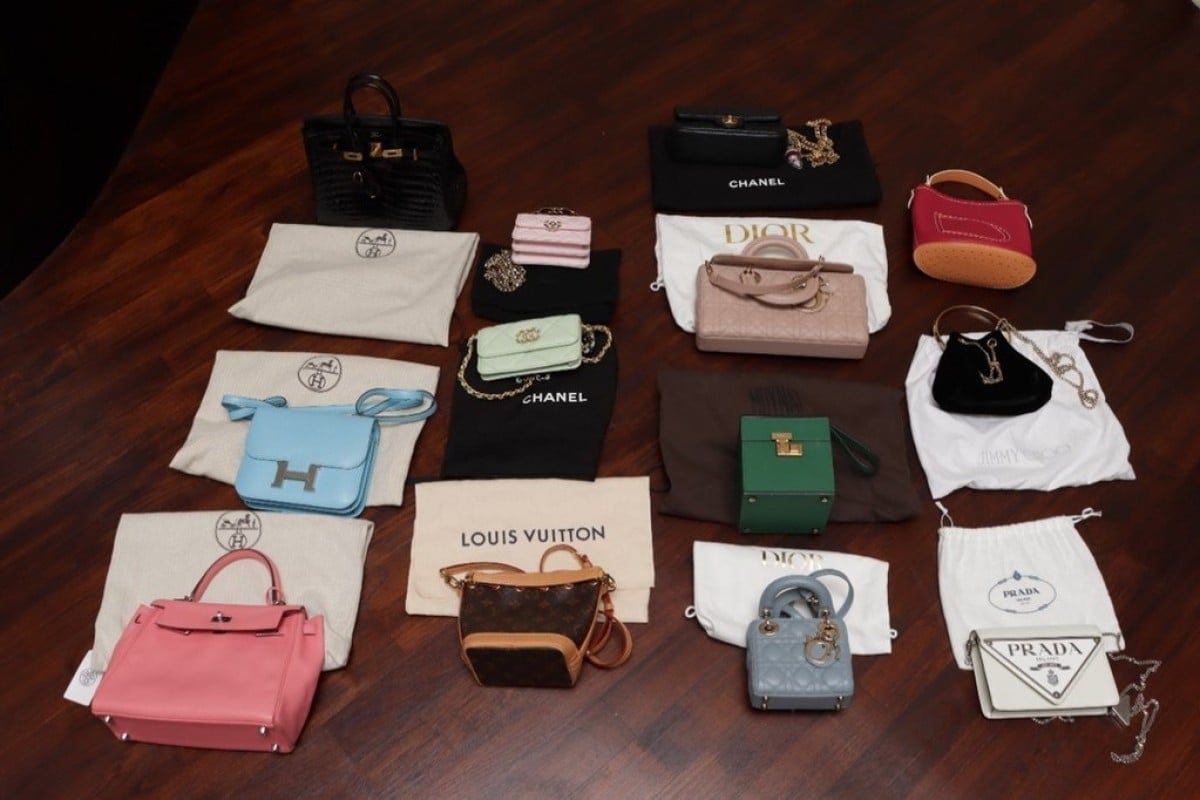
Among the larger firms, he says that the luxury industry’s approach to regulators is also an example of “regulatory capture”, which occurs when industries that are meant to be policed “end up shaping the rules in their own image, usually via lobbying, ‘technical consultations’, and the revolving door between regulators and industry advisers.”
The bigger risks may sit further down the chain. While conglomerates like LVMH, Kering and Richemont have at least some compliance infrastructure, the secondary market of independent watch dealers, jewellers and resellers often has none at all.
“Where banks have full-blown KYC, ongoing monitoring, and sophisticated sanctions screening, many watch and jewelry businesses historically only had to think about AML if they hit specific regulatory trip wires, for example, being classed as a ‘dealer in precious metals and stones’ or ‘high value goods dealer’ above certain turnover or transaction thresholds”, Clesi says. High margins, concentrated brands, and a strong interest in keeping friction at the point of sale as low as possible make the trade in high-end watches and jewellery “a textbook candidate” for exploitation, he says.
Overregulation and not enough research
Overregulation is a part of the problem, says Dr Mariola Marzouk, a researcher on economic crime prevention and the author of the only textbook on trade-based money laundering. The issue isn’t that existing regulation is wrong, but that “they’ve been built up one on top of the other… in many cases they add layers to this regulation without removing the layers underneath”.
A real diagnosis and solution requires funded research and willing institutions, neither of which exist. In the UK, bodies like the Financial Conduct Authority (FCA) and HMRC (the UK’s tax, payments and customs authority) are “understaffed, have few technical resources” and suffer high staff turnover. What regulators often do is procure private consulting firms to evaluate regulations, which Marzouk says creates a major “incentive issue”. Consultancies that cannot make headway into the over-saturated banking regulation sector offer their services to AML regulators instead, pointing them to new problems in financial crime, creating demand for their services, which increases regulators’ dependence on them.
The advice these firms supply is drawn overwhelmingly from financial services compliance, not trade-based money laundering, says Branislav Hock, Marzouk’s co-author on the book and an associate professor of Economic Crime and Compliance at the University of Portsmouth. “When HMRC hands a Hatton Garden jeweller a risk-based approach template — a tool outlining which customer profiles should raise eyebrows — that template was designed by people whose mental model of risk is a correspondent banking transaction, not a cash sale of a Rolex”, he says.
Effectively, this means that many risk templates which are designed to flag suspicious transactions and individuals are ignoring the stores of value inherent in the luxury assets that are used for trade based money laundering.
Marzouk says UK institutions spend £38 billion on AML compliance every year, but only detect about one per cent of money laundering-related activity. He says ideas which would more effectively tackle this problem have been “silenced” by an industry which doesn’t consider or know about the scale of the problem. “We never hear anything new because those ideas never make it into conferences, into front pages, and never get funding”, he says.
The UK Treasury has acknowledged the problem, to an extent. After a government consultation in September 2023, it admitted that a patchwork of three public bodies and 22 private supervisors had prevented any coherent AML framework, citing HMRC’s “deficiencies”. The fix, announced in October 2025, was to hand firms’ AML oversight to the FCA, but that left “high-value dealers”, retailers which are required to do more stringent checks on customers, under the same HMRC regime Hock which calls “weak”.
This misapplication has created some glaring inefficiencies. “A high-end watch functions as a store of value comparable to a financial instrument but it transacts as a consumption good”, he says, but the AML framework only recognises the first risk, giving dealers tools built for banking sector regulation rather than luxury goods. “Although movement of €50,000 in cash across a border would require a declaration, a watch of the same value comes with no reporting obligation” on the part of a border official.
Hock says that at the border, reporting obligations should exist for those carrying portable high value assets like watches in the same way that cash does. Recent European laws are a good model for the UK. In France, watch dealers now have AML obligations whereas they were previously only incidentally covered under the “precious metals and stones” categories.
There are some signs that regulators are closing in on the problem, including the EU’s Anti-Money Laundering Authority (AMLA) which became operational on 1 July 2025, and its new Anti-Money Laundering Regulation (AMLR) which explicitly adds people trading in high-value goods, such as luxury vehicles, yachts, designer items to the list of entities subject to AML obligations.
The new rules also set an EU-wide cap of €10,000 for cash payments, bringing countries such as Austria, Cyprus, Hungary, Iceland and others, which offer no or looser cash limits, in line with other more restrictive countries. As one legal analyst put it, the impact on “sectors previously relatively untouched, including the luxury sector, is considerable” by the AMLR, which will come into effect in 2027.
But new rules are only as good as the willingness to enforce them. Trade-based money laundering persists, says Bullough, because the incentives all point the same way. For all parties involved, from the police officer who’d rather pick up more winnable cases to the Knightsbridge trader in watches, and certainly for the luxury retailers reaping a profit, it’s sometimes just easier to turn a blind eye.
Anandita Abraham is a freelance journalist specializing in investigations and narrative features. She has bylines in the FT, the Guardian, and Prospect Magazine. You can find her on Bluesky @ananditaabraham.bsky.social
 | A guest post by
|